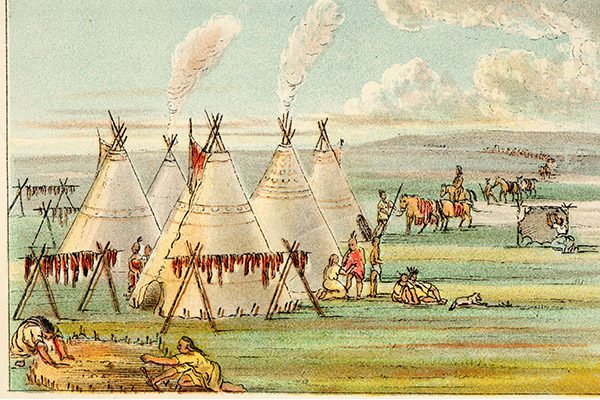
Conscious breathwork practices have been observed within hundreds of Native American tribes. George Catlin, an American author and artist, visited more than 150 tribes between the years of 1830 and 1860.
During his visits, he noticed unique breathing habits among the tribes he observed:
Each tribe he met breathed through their nose day and night. Unlike most of Western society, mouth breathing was uncommon. Mothers in the Native American tribes would ensure their newborns slept with their mouths closed while sleeping, believing that it would prolong their lives and ensure their good looks.
Catlin noted that the tribes had extremely low rates of infant mortality, child deaths from disease and children born with deformities. He was convinced that this conscious breathwork contributed to the good looks and perfect teeth of the tribes he visited.
Today we know that mouth breathing, especially at rest, keeps the body in a state of hyperventilation, leading to oxygen deficiency and decreased ability to heal and repair the body.
The air is precious…for all things share the same breath – the beast, the tree, the man, they all share the same breath.
- Chief Seattle
What is life? It is the flash of a firefly in the night. It is the breath of a buffalo in the wintertime. It is the little shadow which runs across the grass and loses itself in the sunset.