
Marijuana facts
To better understand the dangers of marijuana, we need to understand the science and language surrounding it. First, let’s explore some of the terms and abbreviations associated with marijuana. Expand each accordion to learn more.
Cannabinoid
- A chemical in marijuana that changes how the brain and body’s cells behave
- Marijuana plants contain 125 cannabinoids
- CBD and THC are cannabinoids
THC
- This cannabinoid produces an intoxicating “high”
- Its effects temporarily alter a person’s thoughts, mood and perceptions
- Abbreviation for tetrahydrocannabinol
CBD
- A non-intoxicating cannabinoid found in hemp
- Added to products such as foods, oils, lotion, and supplements
- Some people who take CBD may have side effects like, drowsiness, decreased appetite, vomiting and diarrhea
- Some products have been found to contain different levels of CBD than advertised, or traces of THC
- Abbreviation for cannabidiol
Marijuana
- The dried leaves and flowering tops of a Cannabis plant grown for recreational use
- Contains THC, specifically Delta–9 THC
Hemp
- An agricultural variation of Cannabis plants grown for fibers, oil, CBD, food and more
- Has a very low concentration of THC, specifically Delta–8 THC
The Marijuana Plant
While there are different strains of marijuana plants, we’ll look at the most commonly grown plant: Cannabis sativa L.
Learn more about the marijuana plant by selecting the icons.
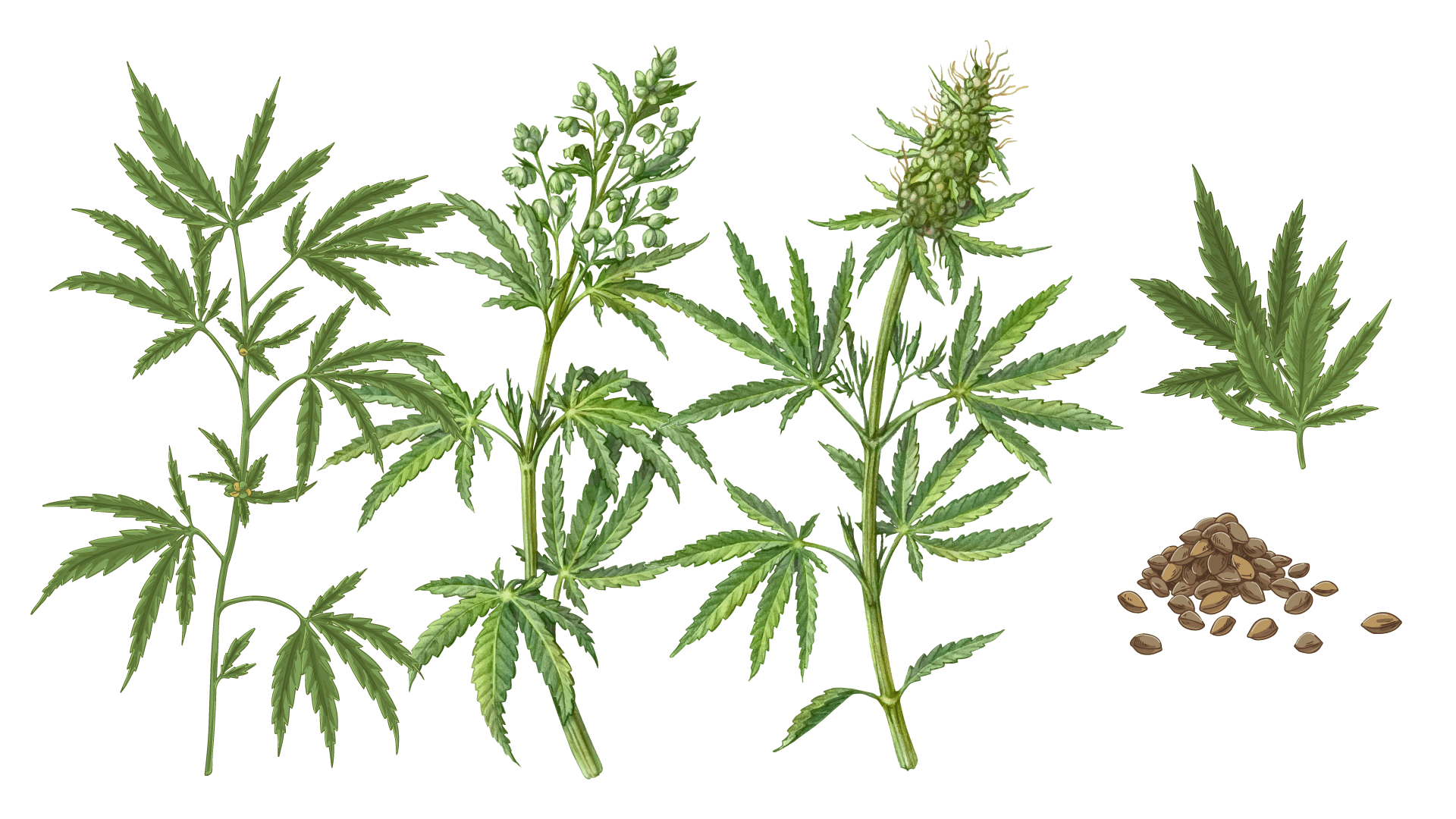
Industrial Hemp
- Cannabis sativa plant grown for industrial or consumer use.
Stem
- Contain fibers used for hemp products such as ropes, textiles and paper.
Flower/Bud
- The highest concentration of THC can be found in the flowers of the female plant.
Leaves
- Contain THC in female plants, used for recreational marijuana.
Seeds
- Rich in essential fatty acids but not THC. Used in hemp products, animal feed and more.
Female Cannabis sativa
- Produce buds and flowers with high concentrations of THC. These plants are grown for recreational marijuana.
Male Cannabis sativa
- Produce pollen and very low concentrations of THC. These plants are grown for hemp and CBD.
Marijuana isn’t a one-size-fits-all drug. It affects people differently, depending on factors like:
- Amount taken
- Concentration of THC
- The product’s ingredients
- How it is ingested
- Other drugs taken
- Underlying medical conditions
- Age, sex, and genetics
- Experience with marijuana use